Jun 25, 2026
Timber Floors
Key Takeaways:
|
Concrete slabs sit beneath thousands of Perth homes, yet many homeowners never realise that what lies underneath can determine whether a new floor lasts five years or fifty.
Installing timber flooring over concrete slabs has become increasingly popular throughout Perth, particularly in modern homes built on slab-on-ground foundations.
While concrete provides a strong and stable base, successful installation depends on far more than simply laying boards across an existing surface.
Moisture levels, slab age, flatness, vapour barriers, adhesives, underlays, and Perth's climate all play major roles in long-term performance.
Many older properties contain slabs that were never designed for modern flooring systems, while newly built homes may still contain residual moisture that can cause future problems.
Coastal suburbs often experience higher humidity levels, and seasonal rainfall can influence moisture movement within concrete long after construction finishes.
Without proper preparation, issues such as cupping, lifting, movement, gaps, or adhesive failure may develop.
Homeowners also face important decisions regarding direct-stick systems, floating floors, acoustic underlays, moisture barriers, and suitable materials for local conditions.
Building standards, manufacturer requirements, and slab preparation methods all affect durability, comfort, and warranty protection.
Growing interest in natural finishes, renovated interiors, and modern open-plan living has encouraged more Perth households to install timber surfaces over existing concrete foundations.
Understanding how slabs behave, which preparation steps matter, and when professional advice becomes necessary can help avoid expensive mistakes later.
This guide explains how concrete slabs affect timber flooring installations in Perth, covering moisture management, slab preparation, installation methods, costs, local conditions, and practical advice for achieving a durable, long-lasting result.Concrete provides a strong foundation for many Perth homes, but not every slab offers suitable conditions for a successful installation.
Moisture movement, surface flatness, curing time, and existing damage can all affect how well a new floor performs over the coming decades. Understanding these factors before work begins helps homeowners avoid costly repairs and premature failures.
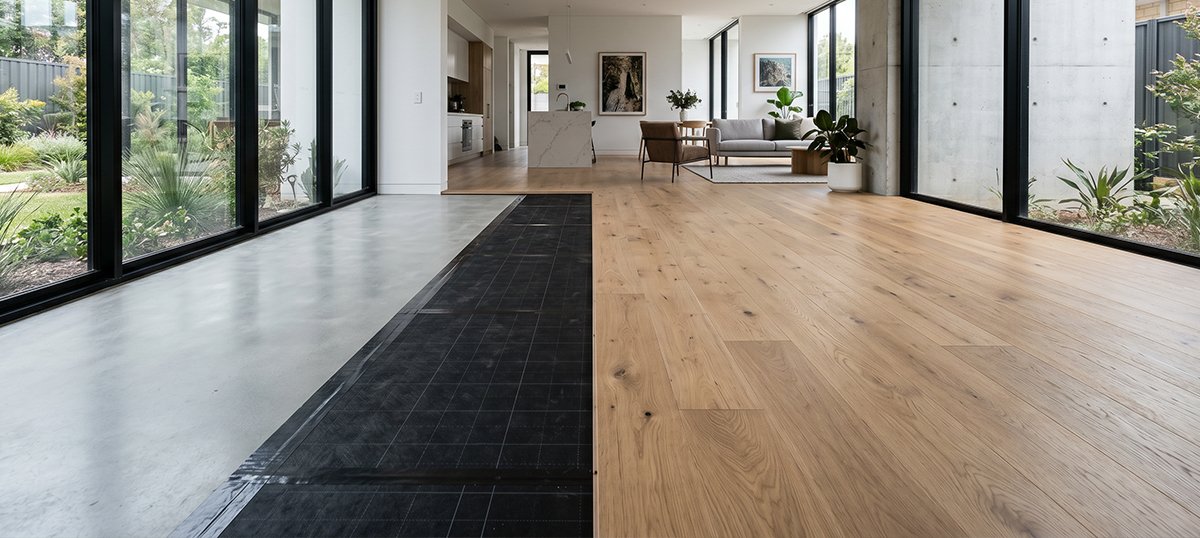
A popular solution for slab-based homes involves installing boards above a properly prepared concrete surface using either a floating system or a direct-stick method.
Each approach offers different advantages depending on slab condition, room usage, acoustic requirements, and moisture levels.
Concrete foundations in Perth behave differently from timber subfloors because they can retain moisture long after construction finishes. Winter rainfall, irrigation, poor drainage, and coastal humidity may increase vapour movement beneath the surface.
Without suitable moisture protection, problems such as board movement, cupping, adhesive failure, or surface damage can develop.
Several benefits make this method attractive for Perth homeowners:
This type of installation also provides flexibility across various home styles.
Contemporary residences, renovated character homes, apartments, and open-plan layouts can all benefit from carefully selected materials combined with correct preparation techniques.
Long-term performance depends heavily on slab preparation rather than the surface material itself. Moisture testing, levelling, vapour barriers, underlays, and compatible adhesives often determine success more than board selection alone.
For this reason, preparation should always receive equal attention during planning stages.
When correctly designed and installed, this approach can deliver decades of reliable service while providing homeowners with a warm, attractive, and durable surface suited to Perth's climate and construction methods.
Concrete may appear completely dry while still releasing moisture vapour from below the slab.
Excess moisture remains one of the leading causes of flooring failures over concrete because trapped vapour can cause swelling, cupping, adhesive breakdown, or movement.
Perth's winter rainfall patterns, reticulation systems, poor site drainage, and coastal humidity can all influence moisture levels beneath residential slabs. Moisture testing should therefore occur before materials arrive on site.
Professional installers commonly use:
Many manufacturers require moisture readings to fall within specified limits before warranties apply.
Fresh concrete contains significant moisture long after construction finishes. Although slabs may feel dry underfoot, internal moisture often remains present for several months.
General curing guidelines include:
Builders, homeowners, and installers should never assume a new slab is ready simply because construction has finished.
Installing boards too early can trap moisture beneath finished surfaces. Over time, this may lead to:
Correct testing provides far greater certainty than relying solely on construction timelines.
Older Perth homes often contain concrete foundations that have experienced decades of movement, settlement, or previous renovations. Cracks, uneven areas, old adhesives, paint, sealers, or contaminants can affect installation quality.
Before work begins, slabs should be checked for:
Minor imperfections can often be repaired, although major structural concerns may require specialist advice.
Most residential flooring installations over existing concrete slabs do not require council approval because no structural changes occur. Internal renovation work generally falls outside planning approval requirements.
However, additional requirements may apply for:
Multi-storey buildings often require sound reduction systems to minimise noise transfer between residences. Certain strata schemes specify minimum acoustic ratings for underlays installed over concrete.
Failure to comply may lead to disputes, rectification work, or approval delays.
Typical requirements may include:
Checking these requirements before purchasing materials can prevent expensive changes later.
Poor site drainage, leaking downpipes, overflowing gutters, or excessive garden irrigation may increase moisture levels beneath concrete foundations.
Homeowners should inspect:
Addressing drainage issues before installation often prevents future moisture problems from developing beneath finished surfaces.
Before selecting boards or finishes, homeowners should determine whether the existing slab provides suitable conditions for installation. Age, moisture levels, cracking, surface flatness, and previous floor coverings all influence performance.
Homes built on reactive soils, older properties, and coastal residences may require additional preparation. A professional assessment can identify potential problems before materials are ordered.
Questions worth asking include:
Different areas place different demands on this kind of setup. Living areas, hallways, kitchens, and bedrooms all experience varying traffic levels and environmental conditions.
Busy family areas generally benefit from more durable finishes, while bedrooms may allow greater flexibility regarding surface texture and coating choices.
Rooms exposed to:
may require additional protection or more durable finishing systems.
Most installations over concrete use either floating systems or direct-stick methods. Each approach offers advantages depending on the slab condition and household requirements.
Floating systems sit above an underlay, allowing slight movement while providing acoustic benefits.
Direct-stick installations bond boards directly to prepared concrete using specialised adhesives.
Benefits may include:
Advantages often include:
The most appropriate solution depends on the slab condition, budget, and household expectations.
Even relatively straightforward projects require specialised equipment to achieve reliable results. Basic equipment commonly includes:
Professional installers use these tools to ensure the substrate meets manufacturer's tolerances before work begins.
Furniture removal, access planning, and climate control all influence installation quality. Air conditioning should operate normally before work begins so materials can adjust to internal conditions.
Homeowners should also consider:
Planning ahead reduces disruption and allows installation to proceed efficiently.
Boards should remain inside the home before installation so they can adjust to internal temperature and humidity conditions. Perth's climate variations make this stage particularly important.
Failure to acclimatise materials properly can contribute to:
Manufacturers often provide specific acclimatisation recommendations based on board type and local conditions.
Some situations require specialist assessment before installation proceeds. Homeowners should seek professional advice when encountering:
Early investigation often prevents costly repairs and helps ensure long-term performance of concrete foundations.
Installing timber flooring over a concrete slab can deliver outstanding results in Perth homes, but long-term performance depends heavily on preparation beneath the surface.
Moisture levels, slab condition, installation method, and environmental factors all play an important role in preventing future movement, lifting, or damage.
Before any work begins, homeowners should understand how concrete behaves, whether existing slabs are suitable, and what moisture protection measures may be required. Careful planning early in the project often prevents expensive repairs later.
Key points to remember include:
For homeowners considering this type of upgrade, understanding the condition of the existing slab is often more important than choosing the flooring itself.
A properly prepared concrete foundation provides the stability needed for a durable, attractive floor that performs well for many years.
Yes, timber flooring can be installed over concrete slabs, provided the slab is dry, structurally sound, and properly prepared.
Most Perth homes built on slab-on-ground construction can accommodate either floating or direct-stick systems once moisture levels and surface conditions have been assessed.
Absolutely. Moisture testing is one of the most important steps before installation begins. Concrete can retain moisture for many years, and excessive vapour can cause cupping, movement, adhesive failure, or swelling.
Professional testing helps determine whether moisture barriers or additional preparation are required.
Both methods can perform well over concrete slabs. Floating systems are generally faster to install and often provide improved acoustic performance, while direct-stick installations offer a firmer feel underfoot and reduced movement.
The most suitable option depends on the slab condition, room usage, budget, and household requirements.
Concrete usually reaches structural strength after approximately 28 days, but moisture may remain inside the slab for much longer. Drying times vary depending on slab thickness, weather conditions, ventilation, and construction methods.
Moisture testing should always determine whether the slab is ready for installation.
Excess moisture beneath the flooring can lead to several issues, including:
Proper slab preparation and moisture protection significantly reduce the risk of these problems developing.
Planning your next flooring upgrade deserves more than guesswork, rushed preparation, or generic advice that ignores Perth’s unique conditions.
Moisture behaviour, slab movement, coastal humidity, coating compatibility, plus installation quality all influence how well finished surfaces perform over the coming decades.
Allen Brothers Flooring provides tailored guidance backed by more than 30 years of industry experience, licensed plus insured workmanship, premium finishing systems, plus genuine attention to detail across every stage of preparation and installation.
From moisture assessments through to final coatings, their team focuses on craftsmanship that protects both appearance plus long-term durability.
Whether your home requires slab preparation, restoration advice, sanding, polishing, or complete surface replacement, professional recommendations can help avoid expensive mistakes before work begins.
Contact Allen Brothers Flooring today to arrange personalised advice, discuss suitable options for your property, or request a free on-site quote for your upcoming project.